
Verified Bioinformatics & Computational Biology Postdoc Fellowships in Europe (Dec 2025)
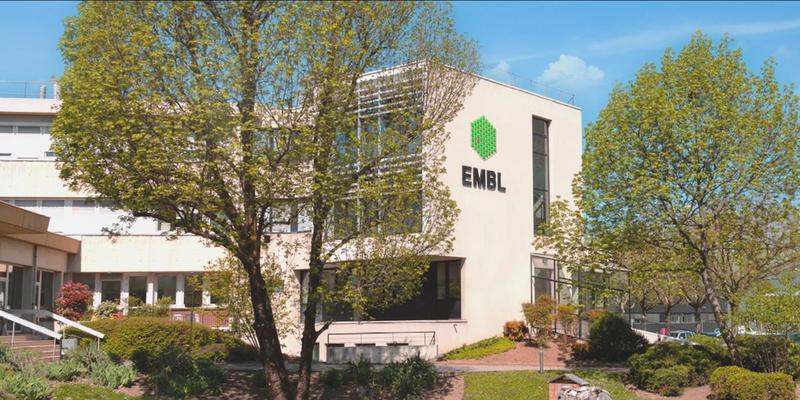
The landscape of biological research has undergone a seismic shift, moving from traditional bench-side observation to the intricate, high-dimensional world of data-driven discovery. As we enter December 2025, the demand for experts who can bridge the gap between biology and computer science has never been higher. For researchers specializing in bioinformatics, computational biology, and multi-omics, Europe offers some of the most prestigious and well-funded postdoctoral opportunities in the world. From the cutting-edge labs of the German Cancer Research Center (DKFZ) to the interdisciplinary hubs of the European Molecular Biology Laboratory (EMBL), the current recruitment cycle for 2026 start dates is now live.
1. German Cancer Research Center (DKFZ) – Genome Instability in Tumors (Lukaschenkova Lab)
The German Cancer Research Center (DKFZ) in Heidelberg stands as the largest biomedical research institution in Germany. The Lukaschenkova Lab is currently recruiting for several Postdoc and Staff Scientist positions focusing on the complex mechanisms of genome instability and tumor evolution.
The Research Focus: Spatial Single-Cell Profiling
The lab’s work is at the forefront of integrative data analysis. Modern cancer research no longer relies on bulk sequencing; it requires ultra-large scale single-cell multiome analysis. Successful candidates will work with datasets exceeding 100,000 cells per donor, utilizing spatial transcriptomics to understand how the physical location of a cell influences its behavior and interactions within the tumor microenvironment.
Key Responsibilities
-
Integrative Data Analysis: Developing models for biological discovery using multi-omics datasets.
-
Clonal Evolution: Investigating phylogeny and the impact of copy-number changes on the single-cell transcriptome.
-
Software Development: Building scalable, robust software tools for scientific computing, primarily in R/Bioconductor and Python.
Candidate Requirements
Applicants must hold a PhD in a relevant quantitative field—bioinformatics, systems biology, statistics, physics, or computer science—with a demonstrated interest in the life sciences. The position is co-supervised by Wolfgang Huber (EMBL) and Aurélie Ernst (DKFZ), offering a unique collaborative environment between two world-leading institutions.
Position Details:
-
Initial Term: 3 years (extensible to 5 years).
-
Location: Heidelberg, Germany.
2. EMBL EIPOD-LinC Fellowship Programme (2025 Call)
The European Molecular Biology Laboratory (EMBL) is synonymous with excellence in life sciences. Their “Exploring Life in Context” (EIPOD-LinC) program is a specialized 3-year postdoctoral fellowship designed for researchers who wish to pursue interdisciplinary projects.
Interdisciplinary Multi-Omics and ML
The EIPOD-LinC fellowships are highly competitive and emphasize the integration of diverse data types. The program encourages the use of Machine Learning (ML) to interpret multi-omics data, seeking to understand biological systems in their natural environment.
Strict Eligibility and Mobility Rules
EMBL adheres to the Horizon Europe mobility rules. Applicants can be of any nationality but must not have spent more than 12 months in the last three years at the EMBL site or the Member State partner lab where they intend to work.
-
Academic Window: Must have a PhD by February 2, 2026, and no more than eight years of research experience since the award of the degree.
-
Secondment: All projects must include a partner lab from an EMBL Member State. Fellows are expected to spend 3 to 12 months on a research secondment at this partner institution.
Application Timeline:
-
Deadline: February 2, 2026.
-
Interviews: April 20–21, 2026 (via Zoom).
-
Start Date: No later than August 31, 2026.
-
Portal: EMBL EIPOD-LinC Application
3. EMBL Zimmermann-Kogadeeva Group: Microbiome and Metabolomics
For those interested in the hidden world of microbial communities, the Zimmermann-Kogadeeva Group at EMBL offers postdoctoral roles focusing on microbiome metabolomics.
Quantifying Microbial Dynamics
The lab uses a mix of large-scale experimental screening and computational method development. The goal is to quantify and predict how microbial communities interact with each other, their environment, and their host. This involves sophisticated multi-omics integration and machine learning to model metabolic flux and bacterial genetics.
Desired Profile
The group seeks highly motivated individuals capable of leading independent research. Experience in chemical biology, bacterial genetics, or computational metabolomics is highly valued. Prospective candidates should reach out directly to Maria Zimmermann-Kogadeeva with a CV and a motivation letter outlining future career plans.
Apply: 🔗 https://www.embl.org/groups/zimmermann-kogadeeva/open-positions/
4. University of Luxembourg – Postdoc in Bioinformatics & Cancer Biology
The University of Luxembourg is offering a lucrative postdoctoral position within the TARGET-SEQ project, focusing on colorectal cancer and stromal-epithelial crosstalk.
High-Earning Opportunity in Belval
Luxembourg is known for its high standard of living and competitive academic salaries. This position offers a yearly gross salary of EUR 85,176 for a full-time (40 hours/week) role. The Belval Campus is a modern, international hub with staff from over 90 countries.
Apply: 🔗 https://www.uni.lu/en/jobs/postdoctoral-researcher-in-bioinformatics-cancer-biology/
Technical Focus: Translational Systems Biology
The researcher will be responsible for:
-
Conducting bioinformatics analysis for the TARGET-SEQ consortium.
-
Implementing new tools for single-cell sequencing and spatial omics.
-
Working in High-Performance Computing (HPC) environments to process massive genomic datasets.
Requirements
A PhD in Biological Sciences or Data Science is required. Candidates with prior experience in biostatistics and a proven track record of peer-reviewed publications in cancer biology or immunology will be prioritized.
Contract Details:
-
Duration: 24-month fixed-term contract.
-
Start Date: January 1, 2026 (Preferred).
5. University of Copenhagen – Novo Nordisk Foundation Center (CBMR)
The Novo Nordisk Foundation Center for Basic Metabolic Research (CBMR) is recruiting for fellowships in bioinformatics, AI, and single-cell omics starting March 2026.
Understanding Cardiometabolic Disease
This role focuses on molecular profile characterization to understand the early regulatory changes that lead to cardiometabolic diseases. By combining single-cell multi-omics with wearable-derived data and machine learning, researchers aim to build systems-level models of human biology.
Professional Development
The CBMR provides an exceptional environment for translation. Researchers are encouraged to transform molecular insights into actionable knowledge for precision medicine. Proficiency in Python or R is a baseline requirement, as is experience with systems biology or network modeling.
Deadline: December 31, 2025.
Contact: Jordi Merino (jordi.merino@sund.ku.dk)
6. University of Southern Denmark (SDU) – Tiwari Lab
Professor Vijay Tiwari’s lab at SDU is looking for a Postdoc in Computational Biology to decode the disruption of cellular identity in human diseases.
Genomic Machine Learning
The lab utilizes genomic ML to analyze bulk, single-cell, and spatial omics datasets. A key part of the role is leading projects on gene regulatory mechanisms. Candidates with experience in software containers (Docker/Singularity) and workflow managers like NextFlow are highly desirable.
Key Offerings:
-
Stimulating, diverse research environment.
-
Initial one-year contract with long-term extension possibilities.
-
Support with housing, visas, and taxes through the International Staff Office (ISO).
Deadline: January 11, 2026.
Apply: 🔗 https://www.nature.com/naturecareers/job/12849337/postdoc-in-computational-biology/
7. Vall d’Hebron Institute of Oncology (VHIO), Barcelona
Located in one of Europe’s most vibrant cities, VHIO is seeking a Bioinformatician Postdoc for translational cancer research.
Spanish Translational Excellence
The role involves developing computational pipelines for genomic, transcriptomic, and epigenomic studies, with an initial focus on scRNA-seq and ATAC-seq. VHIO offers a permanent contract, which is rare for postdoctoral roles, providing significant job security.
Compensation and Benefits
-
Salary: Based on VHIO pay scales.
-
Perks: Restaurant vouchers, medical insurance, transport cards, and fully subsidized language courses (Catalan, Spanish, or English).
-
HPC Access: Work with state-of-the-art high-performance computing infrastructure.
Deadline: December 20, 2025.
Apply: 🔗 https://jobs.vhio.net/en/jobs/6843633-2025-063-01-bioinformatician-postdoc
European Postdoc Opportunities (2025-2026)
| Institution | Country | Focus Area | Salary / Funding | Deadline |
| DKFZ | Germany | Spatial Single-Cell | Competitive | Open/Rolling |
| EMBL | EU-wide | Interdisciplinary | Fully Funded | Feb 2, 2026 |
| Uni Luxembourg | Luxembourg | Cancer Bioinformatics | €85,176/year | Jan 1, 2026 |
| Uni Copenhagen | Denmark | AI & Metabolic Health | AC Agreement | Dec 31, 2025 |
| SDU | Denmark | Genomic ML | Competitive | Jan 11, 2026 |
| VHIO | Spain | scRNA-seq / ATAC-seq | Scale-based | Dec 20, 2025 |
Statistics on Bioinformatics Careers in Europe
According to recent labor market reports for 2025, the bioinformatics sector in Europe is seeing a 12% year-on-year growth in academic and industrial hybrid roles.
-
Salary Variance: Postdoctoral salaries in Luxembourg and Switzerland remain the highest, often exceeding €80,000, while Germany and Denmark offer strong social benefits and stipends ranging from €50,000 to €65,000.
-
Diversity in Stem: Current data from the European Research Council (ERC) indicates that approximately 34% of postdoctoral researchers in computational biology are women, with active initiatives like the EMBL “EIPOD-LinC” specifically promoting inclusive hiring practices to increase representation of underrepresented groups in data science.
-
Success Rates: The success rate for prestigious fellowships like the MSCA (Marie Skłodowska-Curie Actions) or EMBL EIPOD remains between 8-14%, making early preparation and technical proficiency in ML and R/Python critical differentiators.
Expert Tips for a Strong Application
-
Technical Portfolio: Do not just list “Python” on your CV. Provide links to GitHub repositories, NextFlow pipelines you have built, or Bioconductor packages you have contributed to.
-
Mobility Awareness: For EMBL and MSCA calls, ensure you meet the mobility requirements. If you have lived in the host country for more than 12 months recently, you may be ineligible.
-
Motivation Letters: Avoid generic statements. For the DKFZ role, mention the specific challenges of scaling single-cell analysis to 100,000+ cells and how your previous work addresses this.
-
Reference Coordination: Ensure your referees are ready. EMBL, for instance, requires references to be sent directly to their office by the deadline—institutional emails only.