
Fully Funded PhD Opportunities 2026: BIM & Digital Twin Systems in Canada, HCI & Computing Education in the USA, Research Fellowships in the Netherlands, and Civil/Environmental Engineering & Sustainable Materials Science Programs
Fully funded PhD opportunities remain one of the most transformative academic pathways for researchers aiming to advance their expertise, contribute to groundbreaking discoveries, and build meaningful long-term careers in academia, industry, or public-sector research. The global landscape for fully funded PhD positions continues to expand, especially in the fields of Building Information Modeling (BIM), Digital Twin Systems, human–computer interaction (HCI), computing education research (CER), smart building systems, environmental engineering, civil engineering, sustainability, materials science, and polymer engineering. Many top research universities in Canada, the United States, and the Netherlands are now launching large-scale research projects for 2026 to support graduate students through competitive fellowships, industrial collaborations, and interdisciplinary research initiatives.
1) Fully Funded PhD Positions in BIM Data Structures, Process Modeling, and Digital Twin Systems – Toronto Metropolitan University, Canada (Start 2026)
Toronto Metropolitan University is offering two prestigious fully funded PhD fellowships under the Building DECODER initiative. Led by Professor Jenn McArthur, the DECODER program aims to revolutionize the way building portfolios are analyzed, optimized, and retrofitted using data-driven algorithms, AI-powered inference, advanced energy modeling, semantic workflows, and digital twin ecosystems.
The PhD fellowship provides 35,000 CAD per year for four years, making this one of Canada’s most financially competitive doctoral opportunities in architectural science, building engineering, and digital innovation in the built environment.
Project Overview
The DECODER initiative tackles large-scale building energy performance, retrofit planning, portfolio optimization, information modeling, and decarbonization analysis. The project explores digital integration between BIM, GIS, facility management, energy modeling, and smart building systems.
Research themes include:
• Rapid energy modeling and automated diagnostics
• Fault Detection and Diagnostics (FDD)
• Semantic learning and information standardization
• AI-driven building attribute inference
• Digital twin generation for retrofit analysis
• Advanced sustainability strategies across building portfolios
Two positions are currently open:
PhD Position 1: WP1 P2 – Developing Information Structures and Process Modeling
This position focuses on the creation, refinement, and validation of open standards–based information workflows using openBIM and openGIS systems. The candidate will work on process mapping, Model View Definitions (MVDs), information exchange requirements, and integration between BIM/GIS systems and smart building databases.
Responsibilities
• Identify decarbonization and retrofit use cases for building portfolios
• Map stakeholder workflows and information exchanges
• Develop data structures using openBIM (IFC) and openGIS frameworks
• Create process models for Architecture, Engineering, and Construction (AEC) stakeholders
• Define MVDs and information exchange requirements
• Integrate data with facility management and smart building systems
• Validate frameworks using prototypes and real-world building case studies
Eligibility
Candidates must have:
• Master’s degree in civil engineering, building engineering, architecture, geoinformatics, or related fields
• Experience with openBIM (IFC), buildingSMART standards, or openGIS
• Skills in process modeling, information workflows, or schema development
• Knowledge of facility management data and building performance (asset)
• Strong communication and analytical skills
PhD Position 2: WP4 P15 – Digital Twin Systems for Portfolio Assessment
This position emphasizes AI-driven inference, geospatial automation, energy modeling, and portfolio-level digital twin generation.
Responsibilities
• Develop automated geospatial workflows for large building portfolios
• Integrate machine learning pipelines to infer missing building characteristics
• Generate energy and cost simulation models for retrofit scenario evaluation
• Connect heterogeneous datasets: GIS, BIM, sensor systems, municipal databases
• Develop and maintain portfolio-level digital twin systems
• Collaborate with industry and municipal partners for model validation
Eligibility
• Master’s degree in computer science, GIS, mechanical engineering, or related discipline
• Strong programming background and familiarity with ML workflows
• Skills in spatial databases, GIS platforms, or geospatial automation
• Understanding of energy systems or simulation tools (asset)
• Ability to manage large datasets and reproducible computational pipelines
Application Instructions
Applicants must compile a single PDF containing:
• Letter of intent tailored to the project and position (WP1 or WP4)
• CV
• Unofficial transcripts
• Contact details of two referees
• Publications (optional but beneficial)
• Additional documents supporting the application
Email subject format:
DECODER-<WP#>-<Position#> (e.g., DECODER-WP4-P15)
Applications are reviewed on a rolling basis.
Questions: decoder@torontomu.ca
2) Fully Funded PhD Positions in HCI & Computing Education Research (CER) – University of Maine (Fall 2026)
The Puffin Lab at the University of Maine, led by Dr. Zihan Wu, is recruiting 1–2 fully funded PhD students for Fall 2026. The research focuses on designing interactive learning technologies to support novice programmers, scale personalized instruction, and improve learning outcomes in computing education.
Research Areas
• Human–Computer Interaction (HCI)
• Computing Education Research (CER)
• Learning Sciences
• Interactive tool design
• Educational data analysis (experiments, log data, surveys, interviews)
Ideal Candidate Profile
• Deep interest in HCI + Computing Education
• Experience with empirical research methods
• Programming experience (Python, JavaScript/TypeScript, etc.)
• Curiosity about human learning
• Commitment to inclusive educational technologies
• Strong ethics and collaborative spirit
How to Express Interest
Candidates should fill out the research interest form (preferably by December 31, 2025):
https://docs.google.com/forms/d/e/1FAIpQLSdmZm8TTXeeYRW5bgiIe48fPAKEG4F6u-sHSrJIuPyPI4TJhw/viewform
Formal PhD applications are submitted through the University of Maine Graduate School by January 15, 2026.
3) Fully Funded PhD and Postdoc Opportunities – The Netherlands
The Netherlands remains a top destination for fully funded PhD and postdoctoral research due to strong government support, world-class universities, international collaborations, and excellent working conditions under the Dutch academic employment system.
Types of Opportunities
- University-Specific PhD Scholarships
Example: Leiden University (details at their PhD program portal) - Project-Based Fully Funded Positions
Example: Delft University of Technology (TU Delft), known for engineering, energy, climate, AI, and computational sciences.
Benefits of Dutch PhD Programs
• Full employment contracts
• Competitive stipends
• Social security and pension benefits
• Relocation support
• Family-friendly environment
• Opportunities to work with top European research consortia
Candidates are encouraged to apply widely and persistently, as many successful scholars earn opportunities after multiple attempts.
Contact for Personalized Help
Phone: +923007519970
Email: mpconsultantservice@gmail.com
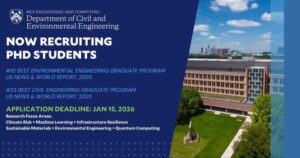
4) Professional Master’s Programs with Scholarships up to $25,000 – Rice University (USA)
Rice University offers competitive scholarships for students enrolling in Civil and Environmental Engineering Master’s programs. These programs provide industry-driven training, state-of-the-art research facilities, and preparation for careers in applied engineering roles.
Prerequisites for Environmental Engineering
• Two semesters of calculus
• One semester of differential equations
• One year of chemistry
• Physics (one semester)
• Biology (one semester)
• Fluid mechanics
Some prerequisites may be waived.
Prerequisites for Civil Engineering
• BS in Civil, Mechanical, or related engineering disciplines
• Preparedness in structural mechanics
Deadlines
Fall: January 15
Spring: October 15
Contact
Olga Trejo
Phone: 713-348-2646
Email: olga.c.trejo@rice.edu
5) Fully Funded PhD Recruitment for Fall 2026 – Rice University Civil & Environmental Engineering
Rice University’s CEE department is recruiting across multiple faculty groups for its highly competitive PhD program. Research areas include:
Representative Faculty and Topics
• Physics-informed ML, climate risk analysis
• Quantum algorithms for engineering reliability
• Material informatics, sustainable cement
• Nanocomposite membranes
• Multi-hazard structural reliability
• Environmental synthetic biology
• Urban resilience modeling
Application Steps
- Explore graduate program: https://cee.rice.edu/academics/graduate-programs/graduate-admissions
- Review research areas: https://cee.rice.edu/research
- Contact faculty directly
- Submit application by January 15, 2026
This program is renowned for innovation, mentorship, and interdisciplinary collaboration.
6) Fully Funded PhD in Sustainable Additive Systems for Rubber Durability – University of Twente (Netherlands)
This four-year PhD focuses on sustainable polymer chemistry, elastomer engineering, materials durability, and industrial collaboration. Funded in partnership with Apollo Tyres and LANXESS, it offers one of the strongest industry-aligned doctoral experiences in Europe.
Research Scope
• Designing protective delivery systems for functional additives
• Integrating smart carriers into rubber matrices
• Enhancing product lifetime through improved durability
• Polymer synthesis and colloidal formulations
• Industrial-scale rubber compounding and testing
Candidate Requirements
• Master’s in Chemistry, Materials Science, Polymer Engineering, or related field
• Strong expertise in elastomer technology, polymer chemistry, or colloidal systems
• Ability to manage full research pipeline (synthesis → testing → analysis)
• Excellent English communication
Funding Package
• Salary: €3,059 to €3,881 monthly (4 years)
• 8% holiday allowance
• 8.3% year-end bonus
• Pension (ABP)
• Relocation support
• Access to state-of-the-art labs
Application deadline: 18 January 2026
Apply: https://utwentecareers.nl/en/vacancies/2293/phd-position-sustainable-additive-systems-for-enhanced-rubber-durability/